A page-by-page journey

Ancient
Greece

A place to explore the stories, people, and ideas of the ancient Greek world.
  1. Bce and CE
  2. City State
  3. Athens
  4. Olympics
  5. Greece
  6. Votes on Pottery
  7. A New Way to Govern Athens
  8. A Vote on the Pnyx
  9. The Parthenon
  10. Life Below the Acropolis
  11. Government and Economy
  12. Who Was Left Out?
  13. Quiz
  14. Challenge Quiz
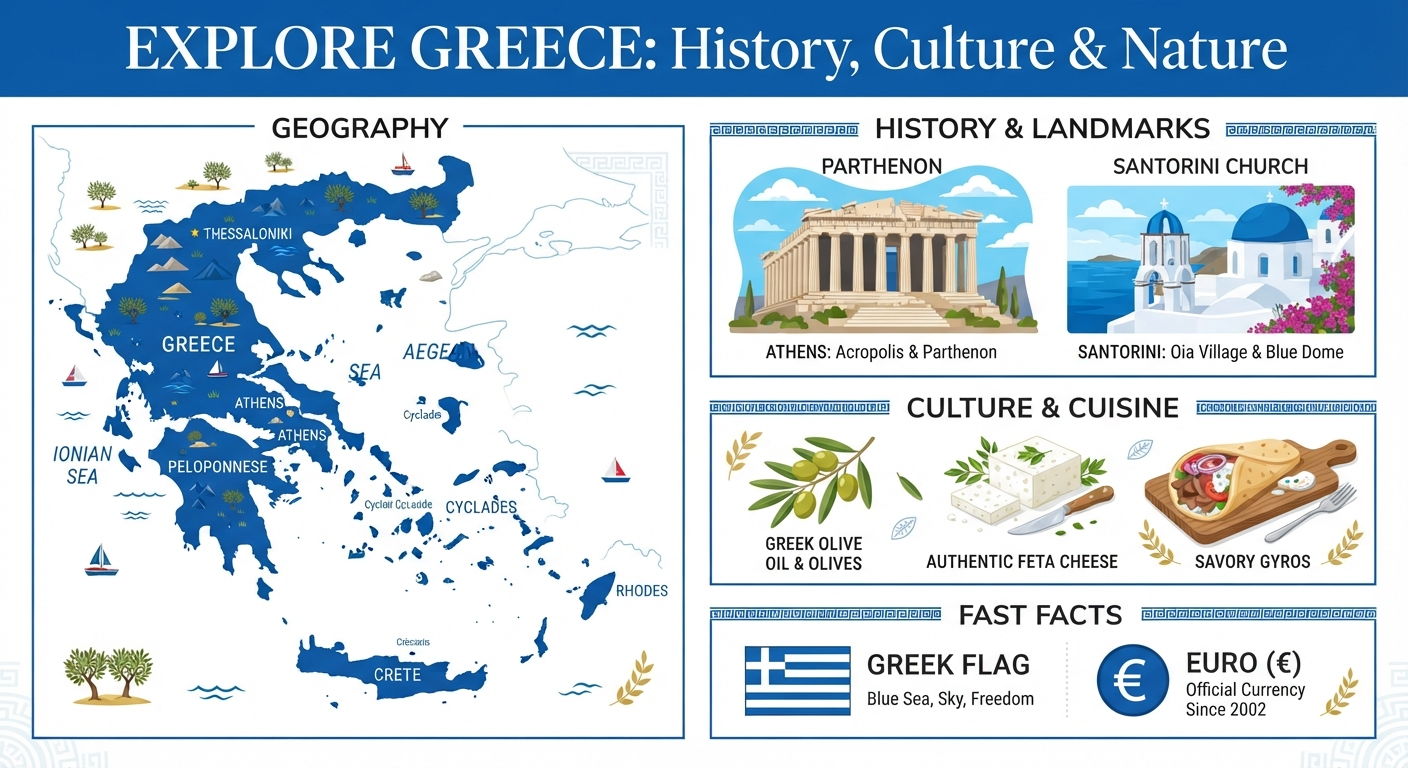
Illustrated overview of Greece showing a map, landmarks, cuisine, the Greek flag, and the euro

Test what you remember

Ancient Greece
Quiz

Answer 12 questions, then take on 3 harder bonus questions. Each correct answer is worth 2 points, for a total of 30!

Question 1 of 15⭐ 0 points

Athens and democracy

1. What does BCE mean?
2. What does CE mean?
3. What did a Greek city-state have of its own?
4. How did men show they agreed with a speaker at the Pnyx?
5. Who was left out of voting in the Athenian assembly?
6. How were the 500 council members chosen?

Places and everyday life

7. What was the Agora used for?
8. What happened during ostracism?
9. What did farmers bring to the Agora?

Stories, temples, and games

10. Which goddess was the Parthenon built to honor?
11. What gift did Athena give Athens in the story on the site?
12. In what year did the first modern Olympics begin?

Bonus round · harder questions

Ready for a challenge?

13. During ostracism, how long could a citizen be sent away?
14. Which dates match the building of the Parthenon?
15. Before 508 BCE, who held most of Athens’ political power?

Level two · Bonus challenge

Think like an
Athenian

These 10 harder questions ask you to connect ideas from across the pages. Each correct answer is worth 2 points.

Question 1 of 10⭐ 0 points

Connect the clues

1. At the Agora, which combination best describes what people did?
2. Which sequence matches how a decision was made at the Pnyx?
3. What was the council of 500 meant to do?
4. Which pairing matches the gifts in the story about Athens?
5. Which two details on the site connect the Parthenon with Athena?
6. Why does the site describe Athenian democracy as limited?
7. What made ostracism different from an ordinary assembly vote?
8. What does the pottery evidence tell us about ostracism?
9. Before democracy changed Athens, where was much of the power?
10. Which statement best explains how the council and assembly worked together?